The small bones and joints in your hands take a genuine pounding every time you throw a punch, and boxing gloves alone do not protect them fully. Hand wraps are what actually hold everything together underneath, supporting your wrists, knuckles and fingers so the impact of each punch is distributed safely rather than concentrated on vulnerable joints.
This guide walks through exactly how to wrap your hands properly, the different wrap types available, and how to care for them between sessions.
Quick Answer
Wrap your hands for boxing by looping the thumb, wrapping snugly around the wrist two to three times for support, then covering the knuckles and weaving between the fingers before finishing back at the wrist. Wraps should feel snug and secure without cutting off circulation, and you should always be able to comfortably make a fist.
Why Hand Wraps Matter
A boxer’s hands contain many small bones and joints that are highly vulnerable to fracture and ligament damage under the repeated impact of punching. Hand wraps compress and stabilise these bones and joints, aligning them so the shock of each punch is distributed across the entire hand rather than concentrated on any single vulnerable point. It is a common misconception that wraps are primarily for cushioning, when their real purpose is structural support, holding everything in place so your hand functions as a single, solid striking unit.
Types of Hand Wraps
| Wrap Type | Material | Best For |
|---|---|---|
| Traditional cotton | Woven cotton, secured with Velcro | Frequent training, most durable option |
| Mexican-style | Cotton woven with elastic fibres | Sparring, conforms closely to the hand |
| Gel wraps | Slip-on with gel or foam padding | Quick sessions, less wrist support |
Cotton wraps tend to be the most durable choice for regular training, while gel wraps offer convenience at the cost of the wrist support that traditional wraps provide.
Step-by-Step: Wrapping Your Hands
Securing the wrist
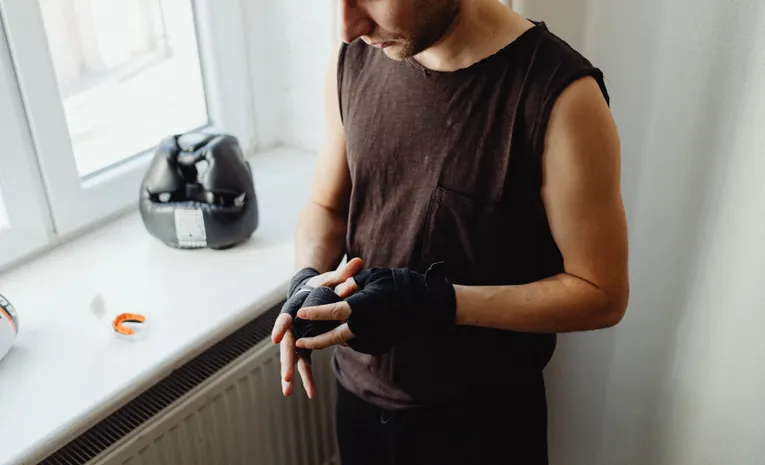
Insert your thumb through the loop at the end of the wrap, letting the material rest on the back of your hand. Wrap around your wrist two to three times, building a snug foundation of support before moving on to the rest of the hand.
Covering the knuckles
Bring the wrap up and over your knuckles, wrapping around them two to three times to provide padding and support across this high-impact area. Keep consistent tension throughout, avoiding gaps or loose sections that would reduce the wrap’s protective effect.
Finishing at the thumb
Loop the wrap around your thumb once to anchor it securely, then bring it back across the knuckles and down to the wrist to finish. Fasten the Velcro end firmly, checking that the overall wrap feels secure without any single section feeling excessively tight compared to the rest.
Getting the Tightness Right
Your wraps should feel snug enough to provide genuine support, but you should always be able to comfortably make a fist and wiggle your fingers without pain or numbness. If your fingers start to tingle or feel colder than usual once wrapped, this is a sign the wrap is too tight and cutting off circulation, and it should be loosened and rewrapped immediately.
Wrapping for Bag Work vs Sparring
For bag work, a standard wrap with even tension throughout is generally sufficient, since the focus is on training volume rather than protecting against another person’s punches. For sparring, many boxers add extra padding around the knuckles and wrap slightly tighter around the wrist, since sparring involves a higher risk of awkward or glancing impacts that place additional stress on the wrist joint specifically.
Caring for and Washing Your Wraps
Hand wraps absorb significant sweat during training, so allowing them to fully air dry after every session, rather than balling them up and storing them damp, helps prevent bacteria and unpleasant odours from developing. Washing wraps regularly, following the care instructions on the specific material, keeps them hygienic and extends their usable life considerably. Owning two or more sets allows one to be washed and dried while the other is in use, which is particularly useful for frequent training schedules.
Common Mistakes to Avoid
Wrapping too loosely provides little genuine support and increases injury risk almost as much as not wrapping at all, since a loose wrap can shift or bunch up during training. Uneven tension, where some sections of the wrap are noticeably tighter than others, can create pressure points that cause discomfort or restrict circulation in specific areas rather than distributing support evenly. Skipping the thumb loop and knuckle coverage entirely, sometimes done to save time, defeats much of the purpose of wrapping in the first place.
Expert Insight
Experienced boxing coaches often emphasise that hand wraps exist to secure the many small, independently moving bones in the hand into a single, stable unit, not to provide cushioning against impact, which is what the glove itself is designed to do. Understanding this distinction helps explain why proper wrapping technique, particularly around the wrist and between the knuckles, matters more for injury prevention than simply adding extra padding wherever it feels comfortable.
Frequently Asked Questions
How tight should boxing hand wraps be? Wraps should feel snug and supportive, but you should always be able to comfortably make a fist and move your fingers without pain, tingling or numbness. If you notice these signs, the wrap is too tight and should be loosened.
What is the difference between cotton and Mexican-style wraps? Traditional cotton wraps are durable and well-suited to frequent training. Mexican-style wraps are woven with elastic fibres, offering a closer, more flexible fit that many boxers prefer for sparring, though they tend to wear out faster than pure cotton.
Do I need different wraps for bag work versus sparring? Not necessarily different wraps, but many boxers adjust their technique, adding extra knuckle padding and wrapping slightly tighter around the wrist for sparring, given the higher risk of awkward or glancing impacts during partner training.
How often should I wash my hand wraps? Regularly, ideally after every few sessions depending on how much you sweat, since wraps absorb significant moisture during training. Allowing them to fully air dry between uses also helps prevent odour and bacteria buildup.
Are gel hand wraps as good as traditional wraps? Gel wraps are more convenient and quicker to put on, but they generally offer less wrist support than traditional cotton or Mexican-style wraps, making them better suited to lighter or shorter sessions rather than serious sparring.
Quick Checklist
- Choose a wrap type suited to your training intensity
- Secure the wrist with two to three snug loops
- Cover the knuckles evenly, maintaining consistent tension
- Anchor at the thumb before finishing back at the wrist
- Check you can comfortably make a fist without numbness
- Air dry and wash wraps regularly to prevent odour
Proper hand wrapping is a small habit that makes a genuine difference to your safety and longevity in the sport. Taking the extra few minutes before every session protects the hands you rely on for every punch you throw.
Choosing the right gear matters just as much as technique. See our guide to how to choose the right boxing glove size.