Packing away winter coats, jumpers and boots feels like a simple job, until you pull them out again next year and find moth holes, musty smells or a sweater that has completely lost its shape. Proper storage takes only a little extra effort but makes a real difference to how your winter wardrobe looks and feels when the cold weather returns.
This guide covers exactly how to prepare, pack and store winter clothes by fabric type, so everything comes out next season ready to wear.
Quick Answer
Wash or dry clean all winter clothing before storing it, since stains and odours attract moths and set in over time. Fold bulky knits and store them in breathable containers, hang structured coats in cotton garment bags, and keep everything in a cool, dry, dark location rather than a damp basement or hot attic.
Why Proper Storage Matters
Clothes left dirty or damp in storage are far more likely to develop mould, attract moths, or pick up permanent odours than clothes that have been properly cleaned and packed first. The materials in winter clothing, wool, cashmere and down in particular, are also more delicate than everyday cottons, meaning careless storage can genuinely shorten their lifespan or leave them misshapen by the time you need them again.
Before You Store: Wash, Dry, Cull
Start by sorting through everything and setting aside anything you no longer wear, since storing items you will not use again just wastes valuable space. Wash or dry clean every remaining item, even things that look clean, since invisible body oils and food residue are what actually attract moths and other pests. Make sure everything is completely dry before packing it away, as even slight dampness can lead to mould or mildew developing inside a sealed container over the following months.
Storing by Fabric Type
| Fabric | Storage Method | Key Consideration |
|---|---|---|
| Wool and cashmere | Fold, breathable garment bag | Never hang, risk of stretching; use cedar or lavender against moths |
| Down and puffer jackets | Loosely folded or hung | Avoid compression, which can damage the fill’s insulating structure |
| Cotton and denim | Fold or hang | Fairly low-maintenance, tolerates most storage methods well |
| Structured coats | Hang in cotton garment bag | Never use plastic dry-cleaner bags for long-term storage |
Folding vs Hanging: What Goes Where
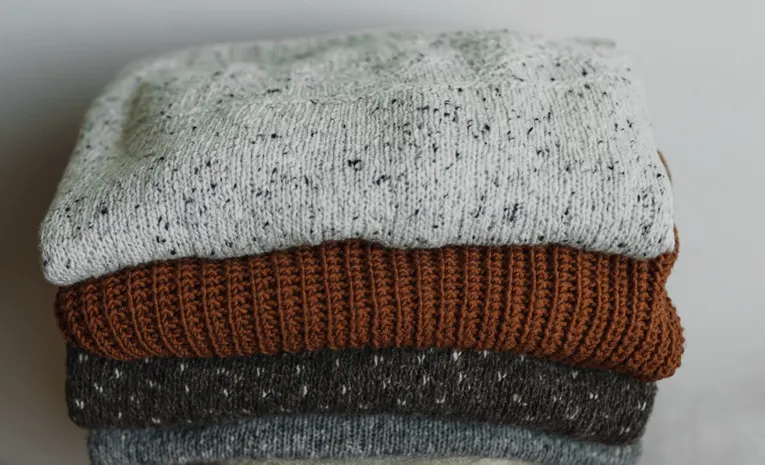
As a general rule, fold anything that could stretch out of shape on a hanger, such as heavy knits, and hang anything that would wrinkle badly if folded, such as structured coats and blazers. Sweaters and cardigans in particular should always be folded rather than hung, since the weight of the fabric pulling on a hanger over several months can permanently distort the shoulders.
Best and Worst Storage Locations
A cool, dry, dark space such as a spare closet or under-bed storage is ideal for winter clothing, since consistent temperature and low humidity protect fabric quality over time. Basements and attics are generally the worst choices despite being tempting for their extra space, since basements tend to be damp and attics experience extreme temperature swings, both of which increase the risk of mould, mildew and fabric damage.
Plastic Bins vs Fabric Garment Bags
Plastic storage bins offer strong protection against moisture and pests, making them a solid choice for folded items like sweaters, provided the clothes are completely dry before sealing, since trapped moisture inside plastic has nowhere to escape. Cotton garment bags are more breathable and better suited to hung items like coats and structured jackets, allowing air to circulate and reducing the risk of the musty smell that can develop in sealed plastic over long periods.
Protecting Against Moths and Pests
Moths are drawn to food residue, body oils and other organic material on clothing, which is why thoroughly cleaning everything before storage is the single most effective form of pest prevention. Cedar blocks or lavender sachets placed inside storage containers offer a natural deterrent without the harsh chemical smell of traditional mothballs, and both need refreshing periodically to stay effective throughout the storage period.
Avoiding Common Storage Mistakes
Storing clothes in their dry-cleaning plastic bags is a surprisingly common mistake, since a lack of airflow can actually trap moisture and lead to staining or mildew over time. Overfilling storage containers is another frequent issue, since natural fibres need room to breathe, and tightly packed items are more prone to wrinkling and losing their shape. Vacuum-sealing bags, while space-efficient, can compress and damage delicate fibres like wool and cashmere, and can also cause puffer jackets to lose the loft that gives them their insulating properties.
Pre-Storage Checklist
Before packing anything away, work through each item systematically: check for stains and treat them, wash or dry clean as needed, ensure everything is completely dry, sort by fabric type, and choose the appropriate storage method for each category rather than treating your entire winter wardrobe the same way.
Expert Insight
Cleaning and storage specialists frequently highlight vacuum-sealed bags as a well-intentioned but often damaging choice for natural fibres. While the space-saving appeal is obvious, compressing wool or cashmere for months at a time can crush the fibres in ways that do not fully spring back, leaving garments feeling flatter and less insulating than before, even though they look perfectly fine on the outside once unpacked.
Frequently Asked Questions
Should I wash winter clothes before storing them, even if they look clean? Yes. Invisible body oils, sweat and food residue are what actually attract moths and pests, and these are not always visible to the eye, so washing everything before storage is essential even if it looks clean.
Can I store winter clothes in plastic bins? Yes, plastic bins work well for folded items like sweaters, provided everything is completely dry before sealing, since trapped moisture has no way to escape from a sealed plastic container.
Where is the worst place to store winter clothes? Basements and attics are generally the worst choices, since basements tend to be damp and attics experience extreme temperature swings, both of which increase the risk of mould, mildew and fabric damage over time.
Can I use mothballs to protect stored clothes? Yes, but cedar blocks or lavender sachets are a gentler, more pleasant-smelling natural alternative that also deters moths effectively, without the strong chemical odour associated with traditional mothballs.
Is vacuum sealing a good way to store winter clothes? Not for delicate natural fibres. While it saves space, vacuum sealing can compress and damage wool, cashmere and down, causing garments to lose shape or insulating quality even though they may look fine once unpacked.
Quick Reference Table
| Step | Action |
|---|---|
| 1 | Sort and donate what you no longer wear |
| 2 | Wash or dry clean everything, even if it looks clean |
| 3 | Ensure items are completely dry before packing |
| 4 | Fold delicate knits, hang structured coats |
| 5 | Choose a cool, dry, dark storage location |
| 6 | Add cedar or lavender for natural pest protection |
A little preparation now means your winter wardrobe will come out of storage next year looking, smelling and fitting exactly as it should.
For more seasonal styling inspiration, see our guide to scarves and how to wear them.