Black or green patches on a bathroom or bedroom wall are one of the most common complaints in UK homes, especially through the colder months. Mould is not just unsightly, it can also affect indoor air quality and, for some people, trigger respiratory symptoms. The good news is that most household mould can be removed safely and effectively, provided you use the right method and address why it appeared in the first place.
This guide covers safe removal methods, natural alternatives, and how to stop mould from simply growing back a few weeks later.
Quick Answer
Small patches of mould can usually be removed with a cloth dipped in diluted white vinegar or a fungicidal wash carrying a Health and Safety Executive approval number. Wipe rather than brush the area, since brushing releases spores into the air. For mould to stay away, you also need to fix the underlying moisture problem, usually condensation, that allowed it to grow.
Why Mould Grows on Walls
Mould is a naturally occurring organism whose spores are present in the air almost everywhere. It only becomes visible and starts spreading when it lands on a surface with enough moisture and warmth to grow. In homes, this is most often caused by condensation, poor ventilation, or a hidden damp problem, which is why mould tends to reappear in the same spot unless that underlying cause is fixed.
Safety First: What to Wear and Avoid
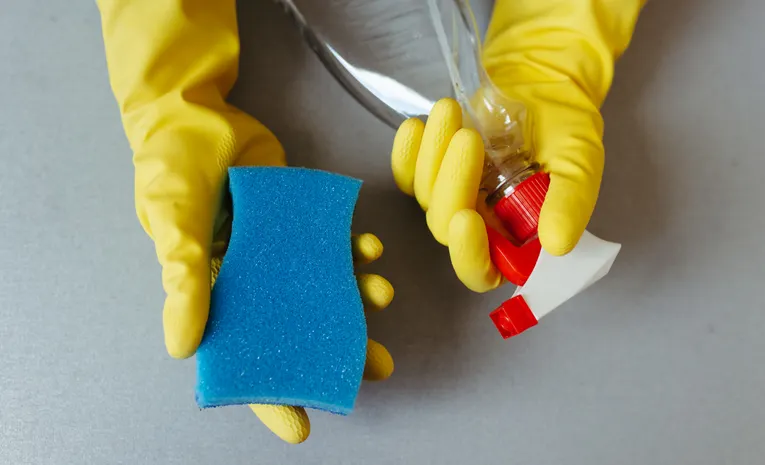
Before cleaning any mould, open windows to ventilate the room and wear protective gloves, a mask and, ideally, goggles to avoid contact with spores. Never brush or vacuum mould directly, since this disturbs the spores and can spread them into the air, increasing the risk of breathing them in. Keep doors closed to other rooms while cleaning to stop spores travelling through the house.
Natural Removal Methods
For smaller patches, several natural options work well. White vinegar can be sprayed undiluted directly onto the mould, left to sit for at least an hour, then wiped clean with a damp cloth. A paste of baking soda and water can be scrubbed gently onto the area with a soft brush or cloth, then rinsed and dried thoroughly. Tea tree oil, diluted at a few drops per two litres of water, is a natural antiseptic option, though it should always be tested on a small hidden area first, since it can stain some surfaces.
Using a Fungicidal Wash
For larger areas, or mould that keeps returning, a dedicated fungicidal wash carrying a Health and Safety Executive approval number is usually more effective than household cleaning products. Apply it following the manufacturer’s instructions exactly, wearing appropriate protective equipment, and ensure the room is well ventilated while you work. Fungicidal washes are formulated specifically to kill mould at the root rather than just removing the visible surface growth.
Natural vs Fungicidal Wash
| Factor | Natural Methods (vinegar, baking soda, tea tree oil) | Fungicidal Wash |
|---|---|---|
| Best for | Small, isolated patches | Larger areas or recurring mould |
| Cost | Very low, household items | Moderate, specific product needed |
| Effectiveness on stubborn mould | Limited | Generally stronger |
| Smell | Vinegar smell fades quickly | Chemical smell during use |
| Availability | Already in most kitchens | Available at supermarkets and hardware shops |
Removing Mould from Wallpaper vs Painted Walls
On painted walls, most of the methods above can be used directly, since the surface is generally more resistant to moisture. On wallpaper, use as little liquid as possible to avoid the paper bubbling or lifting away from the wall. If mould has penetrated deeply into wallpaper, it is often more effective, and hygienic, to remove and replace the affected section rather than attempting to fully clean it in place.
Preventing Mould Returning
Removing visible mould only solves half the problem. To stop it coming back, you need to reduce the moisture that allowed it to grow in the first place. Improve ventilation in high-humidity rooms like bathrooms and kitchens, using extractor fans where available. Avoid drying laundry indoors on radiators where possible, and consider anti-condensation paint in rooms that are particularly prone to moisture. Once an area has been treated, redecorating with a fungicidal paint or wallpaper paste helps prevent regrowth far more effectively than standard products.
Mould in a Rental Property: Whose Responsibility?
If mould is caused by a structural issue, such as a leak, faulty guttering or inadequate insulation, this is generally the landlord’s responsibility to fix, since it relates to the condition of the building itself. If mould is caused primarily by everyday condensation from cooking, showering and drying clothes indoors, responsibility can be less clear-cut and often depends on whether the property has adequate ventilation in the first place. If you are a tenant dealing with persistent mould, it is worth raising the issue with your landlord in writing and keeping a record of the problem and any correspondence.
When Mould Signals a Bigger Damp Problem
Mould that keeps returning shortly after cleaning, appears in unusual locations away from typically humid areas, or covers a large surface area can be a sign of an underlying damp issue rather than simple condensation. In these cases, treating the mould alone will not solve the problem long-term, and it is worth investigating the type of damp involved before continuing to redecorate.
Expert Insight
A common mistake is treating mould as a purely cosmetic problem and simply painting over it once it appears gone. Mould spores can remain within a wall’s surface even after visible growth is wiped away, and painting over an untreated area, rather than a properly cleaned and dried one, often means the mould reappears within weeks, sometimes showing through the new paint itself.
Frequently Asked Questions
What kills mould permanently? No single treatment guarantees mould never returns, since it depends on removing the underlying moisture source. A fungicidal wash followed by improved ventilation and, where needed, fungicidal paint gives the best chance of a lasting result.
Is bleach or vinegar better for mould? Vinegar is a gentler, natural option suited to small patches on non-porous surfaces. Bleach can be effective on moderate to severe mould but should never be mixed with other cleaning products and is best reserved for tougher cases.
Can mould come back after cleaning? Yes, if the underlying moisture problem, usually condensation or a damp issue, is not addressed. Cleaning removes the visible mould, but the conditions that allowed it to grow will cause it to return unless ventilation or damp is improved.
Is it safe to remove mould myself? Small, isolated patches are generally safe to clean yourself with proper protective equipment and ventilation. Large areas, mould affecting structural timber, or mould linked to a persistent damp problem are better handled with professional input.
Who is responsible for mould in a rented property? This depends on the cause. Structural issues like leaks or poor building insulation are typically the landlord’s responsibility, while mould caused mainly by everyday condensation can be a more shared responsibility depending on the property’s ventilation.
Step-by-Step Checklist
- Ventilate the room and put on protective gloves, mask and goggles
- Choose a natural method for small patches or a fungicidal wash for larger areas
- Wipe, never brush or vacuum, the affected surface
- Dry the area thoroughly once cleaned
- Improve ventilation to prevent moisture building up again
- Redecorate with fungicidal paint or wallpaper paste if needed
- Investigate further if mould returns quickly or covers a large area
Treating mould properly means dealing with both the visible growth and the moisture behind it. Get both right, and you should see the problem stay away for good.
For a deeper look at the underlying causes, read our guide to damp in your house, or browse more tips in our guide to simple solutions to common home decorating problems.