EICR Certificate: Complete Guide to Electrical Installation Condition Reports
Electrical safety is one of the most important aspects of maintaining a safe property. Faulty wiring, damaged circuits, and outdated electrical systems can create serious risks for both homeowners and tenants. This is why regular electrical inspections are recommended for residential and commercial properties.
One of the most recognized safety documents used in the United Kingdom is the EICR Certificate. This document confirms whether the electrical installations in a property meet safety standards. Understanding how this inspection works can help property owners maintain compliance and protect occupants from potential electrical hazards.
This guide explains the purpose of an electrical installation condition report, how inspections are performed, and what landlords and homeowners should expect from the process.
What Is an EICR Certificate
An EICR Certificate stands for Electrical Installation Condition Report. It is a detailed document created after a qualified electrician performs an electrical safety inspection of a property.
The purpose of this report is to evaluate the condition of electrical installations such as wiring systems, circuits, sockets, fuse boards, and consumer units. During an inspection, the electrician identifies signs of wear, damage, or potential electrical hazards that may require attention.
The electrical installation condition report is commonly used to confirm that a property meets electrical safety regulations. It also provides a clear overview of any issues that need repair or improvement.
Property owners receive the report after the inspection is complete. The document contains test results, safety observations, and recommendations for improvements where necessary.
Why Electrical Safety Inspections Are Important
Electrical systems naturally deteriorate over time. Wires may become loose, insulation can wear out, and circuits can become overloaded due to modern appliance use.
Regular electrical safety inspections help identify problems before they become dangerous. Some of the most common issues discovered during inspections include damaged wiring, overloaded circuits, poor earthing systems, and outdated fuse boards.
These problems can increase the risk of electrical fires or electric shock. Conducting routine inspections ensures that potential hazards are addressed early.
Another important benefit of electrical inspections is compliance with electrical safety regulations. Landlords and property managers must ensure that rental properties meet current safety standards. Having an up-to-date inspection report demonstrates that the electrical system has been checked by a qualified electrician.
Who Needs an Electrical Safety Inspection
Electrical inspections are useful for many different types of property owners. While landlords are often required to perform inspections regularly, homeowners and businesses can also benefit from routine electrical testing.
Landlords
Landlords have a responsibility to provide safe living conditions for tenants. Electrical installations should be checked regularly to ensure they meet safety standards and comply with landlord electrical safety regulations.
Homeowners
Homeowners may request an electrical safety inspection to verify that their wiring and circuits are safe. This is particularly useful when purchasing a new property or renovating an older home.
Commercial Property Owners
Offices, shops, and other commercial buildings rely on complex electrical systems. Regular inspections help ensure that these systems operate safely and efficiently.
Property Managers
Property management companies often arrange inspections for multiple buildings to maintain consistent safety standards.
What Happens During an Electrical Installation Inspection
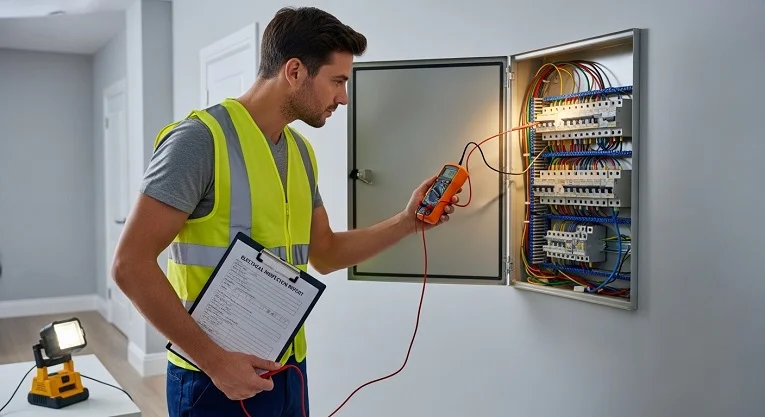
A professional electrical inspection involves several detailed tests and visual checks. The electrician examines all accessible parts of the electrical system to determine whether they meet current safety requirements.
During the inspection, the electrician may check the condition of electrical wiring, sockets, lighting circuits, fuse boards, and earthing systems. Testing equipment is used to measure electrical resistance and verify that circuits function correctly.
The electrician also evaluates whether the electrical system has been overloaded by modern appliances. Older wiring may not be designed to handle current power demands.
After completing these tests, the electrician records the findings in an official report. The report explains whether the installation is satisfactory or whether repairs are required.
Understanding Electrical Safety Codes
When reviewing the inspection report, you may notice several classification codes. These codes help determine the level of risk associated with any issues found.
C1 indicates that a dangerous condition is present and immediate action is required to remove the risk.
C2 means that a potentially dangerous issue has been identified. Repairs should be carried out as soon as possible to maintain safety.
C3 suggests that improvements are recommended even though the installation is not currently dangerous.
FI stands for further investigation. This means the electrician requires additional testing to determine the exact cause of a problem.
These codes help property owners understand the urgency of electrical repairs.
How Long Does an Electrical Inspection Report Remain Valid
Electrical installations should be inspected periodically to ensure continued safety. In many residential properties, the inspection is recommended every five years.
Rental properties may require inspections at regular intervals according to safety regulations. Some commercial buildings may require more frequent testing depending on their electrical usage.
Maintaining an updated EICR Certificate ensures that electrical systems continue to meet safety standards over time.
Cost of Electrical Safety Inspections
The cost of an electrical inspection varies depending on several factors. These factors include the size of the property, the complexity of the electrical system, and the location of the building.
Smaller homes generally require less testing time, which may reduce the cost of the inspection. Larger properties or commercial buildings may require more extensive testing and documentation.
Although the cost can vary, many property owners consider electrical safety inspections a worthwhile investment. Preventing electrical hazards and maintaining safe installations can reduce the risk of expensive repairs in the future.
Legal Requirements for Landlords
Electrical safety laws require landlords to ensure that electrical installations in rental properties remain safe for tenants. Regular inspections help confirm that the electrical system meets safety standards.
Landlords must provide tenants with documentation that proves the electrical system has been inspected. The inspection results should also be shared with local authorities if requested.
Failure to comply with safety regulations may result in penalties or enforcement action. Maintaining proper inspection records helps landlords demonstrate compliance with safety requirements.
Common Electrical Problems Found During Inspections
Many electrical inspections reveal common issues that develop over time. One of the most frequent problems is damaged wiring caused by aging materials or poor installation.
Overloaded circuits are another common issue. Modern households use many electrical devices, and older circuits may struggle to handle the increased load.
Loose connections, faulty sockets, and outdated fuse boards may also appear during inspections. Addressing these problems quickly helps maintain a safe electrical system.
How to Prepare for an Electrical Inspection
Property owners can make the inspection process easier by preparing in advance. Ensuring that all electrical areas are accessible allows the electrician to complete tests efficiently.
Homeowners should also inform the electrician about any electrical issues they have noticed. Flickering lights, tripping circuits, or unusual burning smells may indicate underlying problems.
Providing access to fuse boards, sockets, and electrical panels helps ensure a thorough inspection.
How to Obtain an Electrical Safety Report
Obtaining an EICR Certificate involves hiring a qualified electrician who is trained to perform electrical testing and inspections.
The electrician will schedule a visit to the property and perform a full electrical safety inspection. After completing the tests and reviewing the electrical system, the electrician prepares a detailed report that outlines the results.
Property owners should always choose certified professionals who follow current electrical safety standards. This ensures that the inspection process is accurate and reliable.
Final Thoughts
Electrical safety is essential for protecting both property and occupants. Regular inspections help identify hidden hazards and maintain safe electrical installations.
An EICR Certificate provides valuable insight into the condition of a property’s electrical system. By understanding how electrical inspections work and following recommended safety practices, property owners can ensure that their buildings remain compliant and safe for years to come.
Routine testing and proper maintenance not only reduce risks but also provide peace of mind for homeowners, landlords, and tenants alike.