Direct answer: A good patio works in every season, even in a small garden, when you choose weather-resistant furniture, plan shade for summer and warmth for cooler months, and keep the layout simple enough to change. Pick one material that suits your climate, add lighting, and protect or cover furniture in winter.
A patio is one of the most useful spaces in a home. It is where you eat outside in summer, drink coffee on a mild spring morning, and sit with a blanket on a crisp autumn evening. But many patios only get used for a few weeks a year, because the furniture is uncomfortable, there is no shade, or the space feels bare once the sun goes down. With a little planning, the same patio can work in all four seasons.
This guide covers furniture, planning and what to change each season.
How will you use your patio?
Before buying anything, think about what the patio is actually for. A family that eats outside most evenings needs a proper dining table and chairs. A couple who read outside needs two comfortable chairs and a small table. A home that entertains needs flexible seating that can move around.
Measure the space before you shop. Leave enough room to pull a chair out and walk behind it, which usually means at least 90 centimetres behind a dining chair. A patio that is crammed with furniture feels smaller than an empty one, so buy less than you think you need and add pieces later. Our guide on how to measure a room for furniture uses the same measuring method for indoor rooms, and it works just as well outside.
Think about the sun too. Notice where the sun falls in the morning and the afternoon. A dining table in full afternoon sun will be too hot to use, while a reading corner in deep shade will feel cold.
Which patio furniture material is best?
The material matters more than the style. It decides how long the furniture lasts, how much care it needs, and how it feels to sit on. The table below compares the main options.
| Material | Strengths | Weaknesses | Care needed |
|---|---|---|---|
| Teak and cedar wood | Warm look, naturally weather resistant, lasts for years | Expensive, can silver with age | Oil once a year, cover in winter |
| Wrought iron | Elegant, heavy and stable in wind, long lasting | Heavy to move, can rust if coating chips | Touch up paint, keep dry in winter |
| Aluminium | Light, rust proof, easy to move | Can feel flimsy in strong wind | Wash with soapy water |
| Rattan and wicker | Light, relaxed look, comfortable | Natural rattan suffers in rain | Use synthetic rattan outside, store cushions indoors |
| Plastic and resin | Cheap, light, easy to clean | Can look plain, fades in strong sun | Wash and stack in winter |
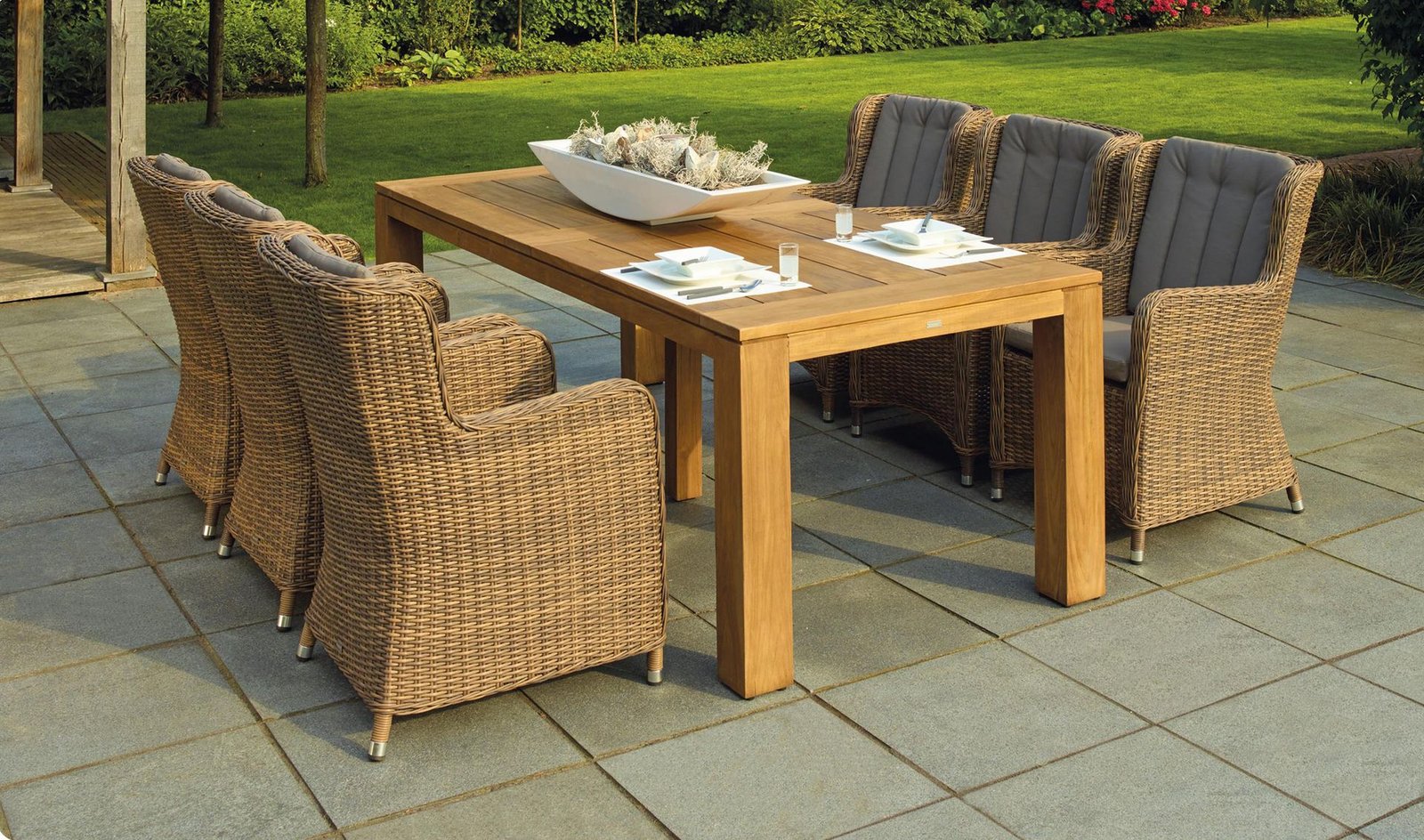
Teak and cedar are excellent woods for outdoor furniture, but check the joinery before you buy. Look for stainless steel screws and sturdy joints, and steer clear of wooden furniture held together only with glue. For wrought iron, a powder-coated finish lasts longer than plain paint. For rattan, synthetic rattan handles rain far better than natural rattan, which is best kept under cover.
Spring: clean, check and plant
Spring is the season to bring the patio back to life. Wash the furniture, check for rust, loose joints and worn cushions, and tighten anything that has loosened over winter. Sweep the paving and clean the joints, because moss and algae make surfaces slippery.
This is also the best time to add plants. Potted trees, shrubs and herbs in different pots add colour and soften hard edges. A few large pots look better than many small ones, and they need watering less often. Place pots where they frame the seating area rather than blocking the path.
Summer: shade, water and evening light
Summer is when the patio earns its keep, and shade is the difference between using it and avoiding it. A large umbrella with a tilt feature lets you follow the sun through the day. A retractable awning or a simple shade sail gives wider cover for a dining table. Light-coloured fabrics reflect heat better than dark ones.
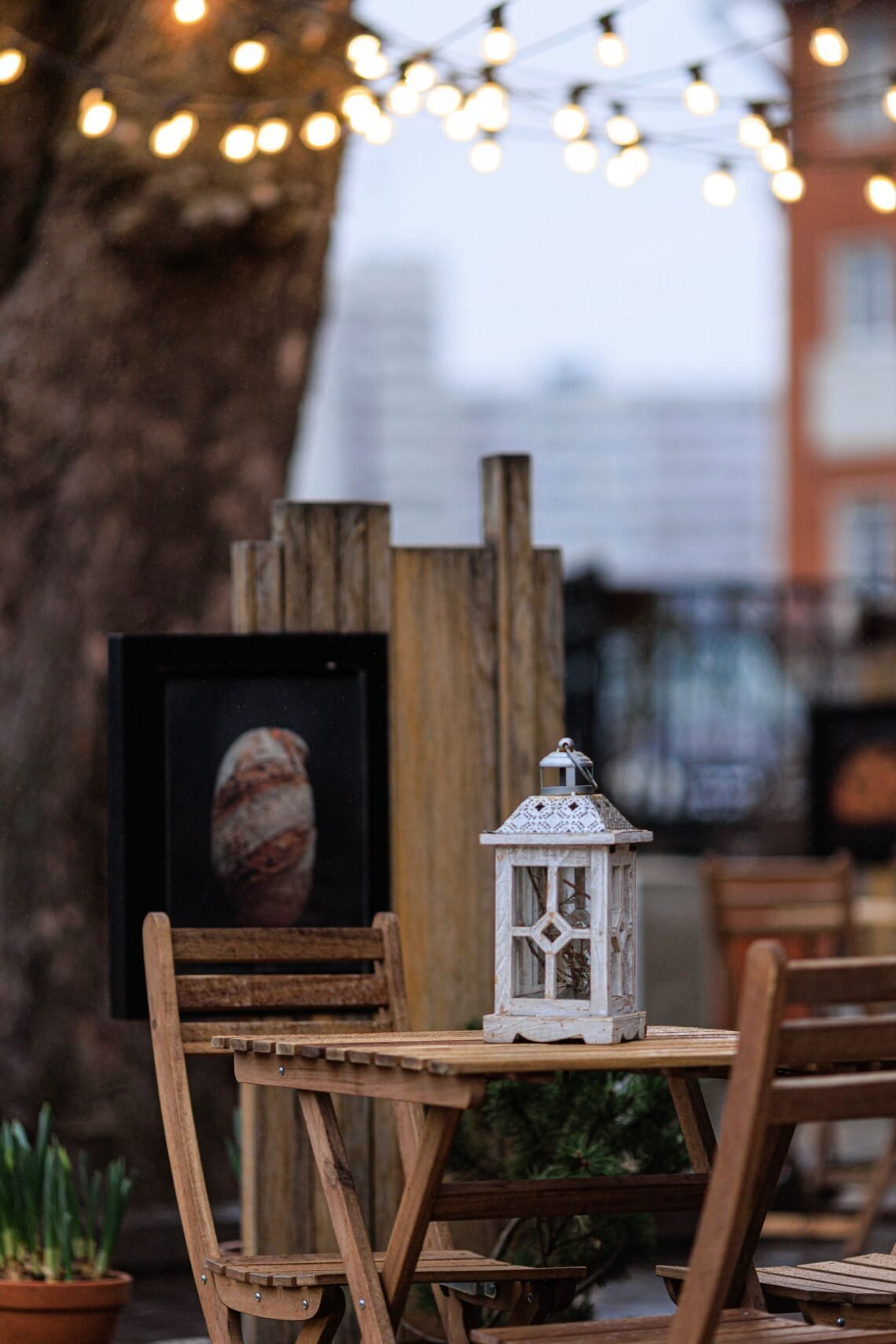
Evenings matter as much as days. Solar-powered lights are easy to install and cost nothing to run: they charge in sunlight and switch on at dusk. String lights, lanterns and a few candles create a warm glow that overhead lights cannot match. Keep the lighting low and warm, and the patio will feel inviting long after sunset.
Autumn: warmth and wind
As the weather turns cooler, the patio does not have to close. An infrared heater or a fire pit extends the season by weeks, and it is worth buying one if you use the patio often. Move the seating closer together and add blankets and outdoor cushions in warm colours. The space will feel cosier simply because it is smaller and warmer.
Autumn is also the time to deal with leaves and rain. Sweep regularly, because wet leaves stain paving and make it slippery. Check that water drains away from the house rather than pooling on the patio.
How do you protect patio furniture in winter?
In winter, protection matters more than use. Cover furniture with breathable covers, or store it in a shed or garage if you have the space. Stackable chairs and folding tables make storage much easier. Bring cushions indoors, because damp cushions go mouldy quickly.
If you do use the patio in winter, a sunny, sheltered spot can be pleasant on a clear day. A windbreak, a wall or a hedge makes a big difference, because wind chill is what makes a winter patio feel cold.
| Season | Main job | Key tip |
|---|---|---|
| Spring | Clean, check, plant | Wash furniture, check joints |
| Summer | Shade, evening light | Tilt umbrella, solar lights |
| Autumn | Warmth, wind | Heater or fire pit |
| Winter | Protect, store | Covers on, cushions indoors |
Frequently asked questions
What is the best material for patio furniture?
It depends on your climate and budget. Teak and cedar last longest and look warm, aluminium is light and rust proof, and synthetic rattan is a good middle ground. Avoid natural rattan in open rain and cheap plastic in strong sun.
How do I keep patio furniture from fading?
Use covers when furniture is not in use, choose UV-resistant fabrics for cushions, and store cushions indoors. Light colours fade less noticeably than dark ones.
Can I leave patio furniture outside all winter?
Some materials can stay out with a cover, such as teak, aluminium and powder-coated iron. Cushions should always come inside, and natural rattan should be stored under cover.
How big should a patio table be?
Allow about 60 centimetres of table width per person for dining, and at least 90 centimetres of space behind each chair so people can sit down and stand up comfortably.
Conclusion
A patio that works all year is not about spending a lot. It is about choosing the right material, planning for shade and warmth, and looking after what you have. Clean and plant in spring, add shade and light in summer, bring warmth in autumn, and protect everything in winter. Do that, and the patio becomes a room you use, not a space you walk past.
For ideas on pulling the indoor side together, read our guide on simple solutions to common home decorating problems.