Direct answer: To choose wallpaper for your living room, start with one feature wall, pick a pattern that suits the room size and light, and choose peel-and-stick or paste-the-wall paper for the easiest job. Modern papers are far easier to hang and remove than old pasted papers, and the choice of patterns is far wider.
For years, wallpaper had a reputation problem. Many people remembered the heavy, stubborn papers of older homes: layers glued on top of each other, edges peeling, and removal jobs that took days. Paint felt simpler, safer and cheaper. But wallpaper never really went away, and in recent years it has come back in a big way.
This guide explains why wallpaper is back, which types to choose, where to use it, and how to hang and remove it without damaging your walls.
Why wallpaper is popular again
The main reason is practical: wallpaper is much easier to live with than it used to be. Modern adhesives release cleanly, so removing a paper no longer means scraping for hours or damaging the plaster underneath. Self-adhesive papers peel off when you want a change, and pre-pasted papers only need water to activate the glue.
The second reason is choice. Digital printing has opened up thousands of designs, from soft geometrics and botanical prints to large-scale murals of landscapes and city scenes. A mural can turn a plain wall into the main feature of a room, something paint alone cannot do.
The third reason is texture. Wallpaper can give a wall depth and character that flat paint cannot match. Grasscloth, linen-look, metallic finishes and raised patterns all add a layer of interest, even in a neutral colour.
Types of wallpaper compared
Not all wallpaper works the same way. The table below compares the main types so you can pick the right one for your room and your confidence level.
| Type | How it works | Best for | Removal |
|---|---|---|---|
| Peel-and-stick | Self-adhesive backing, press onto the wall | Renters, beginners, children’s rooms | Peels off cleanly, no water needed |
| Paste-the-wall | Paste goes on the wall, paper goes on dry | Most rooms, first-time hangers | Strips off in sheets when dry |
| Pre-pasted | Water activates the glue on the back | Quick jobs, smooth walls | Soak and peel, usually straightforward |
| Traditional pasted | Paste goes on the back of the paper | Experienced hangers, heavy papers | Needs soaking and scraping |
| Vinyl | Plastic-coated surface, wipeable | Kitchens, bathrooms, hallways | Peels in layers, may need steaming |
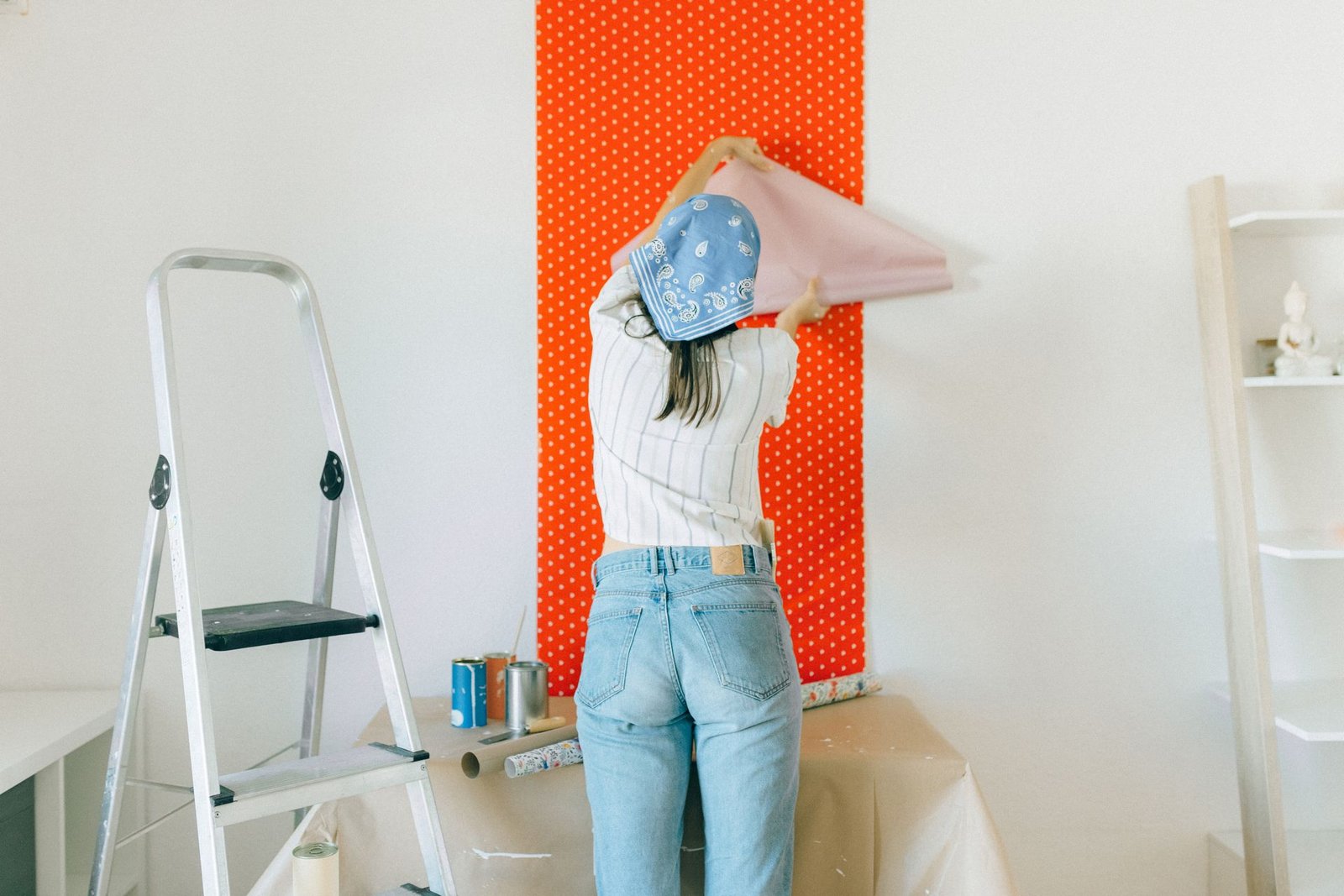
If you are hanging wallpaper for the first time, peel-and-stick or paste-the-wall are the easiest places to start. Vinyl is the practical choice for rooms that get damp or dirty, because you can wipe it clean.
Where to use wallpaper
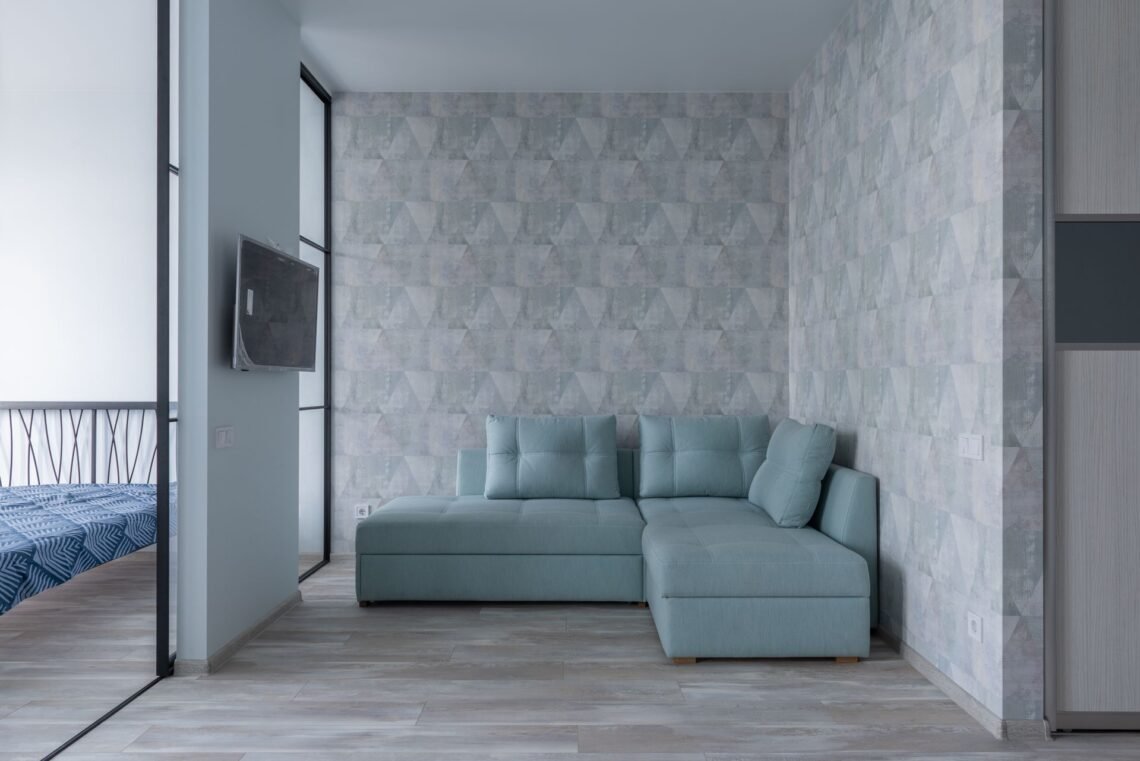
You do not need to paper every wall. In most homes, one feature wall has more impact than a whole room covered in pattern.
| Room | Best approach | Keep in mind |
|---|---|---|
| Living room | One feature wall behind the sofa or television | One wall has more impact than four patterned walls |
| Bedroom | Wall behind the bed, soft patterns, calm colours | Loud, busy prints suit a bedroom less than soft ones |
| Hallway | Light, vertical pattern | Dark, heavy designs struggle in a space with little natural light |
| Small rooms | A bold pattern, which feels deliberate | A small bathroom or study can take a strong print well |
Before you buy, check the wall itself. Wallpaper needs a smooth, dry, clean surface. Fill cracks, sand rough patches, and fix any damp first. Papering over damp is a waste of money: the paper will bubble and peel, and the damp will still be there underneath. If you suspect damp, read our guide on how to remove mould from walls before you start.
How to choose wallpaper for your living room
Choosing a pattern is where most people get stuck. A few simple rules help.
Match the pattern to the room size. Large patterns suit large rooms. In a small room, a large print can feel overpowering, while a small, dense pattern can feel busy. A medium-scale pattern is the safest choice.
Think about light. A north-facing room gets cool, indirect light, so warm colours and lighter patterns work well. A sunny south-facing room can take deeper colours without feeling dark.
Order a sample first. Colours look different on a screen than on a wall. Stick a sample up and live with it for a few days before you commit.
Hanging wallpaper: a simple approach
Hanging wallpaper is a careful job, but it is not a mystery. If you are doing it yourself, follow these steps.
- Measure the room. Measure the height and length of each wall, and work out how many rolls you need. Always buy one extra roll for pattern matching and mistakes. Our guide on how to measure a room for furniture shows the measuring method, which works for wallpaper too.
- Prepare the walls. Fill holes, sand smooth, wipe away dust, and let the walls dry fully.
- Mark a straight line. Use a spirit level and pencil to mark a vertical line on the wall. This is your guide for the first strip.
- Hang the first strip. Line it up with your pencil mark, smooth it from the centre outwards, and trim the top and bottom with a sharp knife.
- Match the pattern. Line up the next strip so the pattern continues across the join. A bad match is the most visible mistake, so take your time here.
- Smooth and trim. Press out air bubbles with a smoother or a clean cloth, and trim edges neatly with a sharp knife.
Work in good light, keep your knife sharp, and do not rush the first strip. If the first strip is straight, the rest follows.
Frequently asked questions
Is wallpaper better than paint?
Neither is better in every case. Wallpaper gives pattern, texture and a finished look that paint cannot match, and modern papers are easy to remove. Paint is cheaper, quicker to change, and better for walls that are not perfectly smooth.
Can I put wallpaper in a bathroom?
Yes, if you choose vinyl wallpaper, which handles moisture and can be wiped clean. Avoid paper-backed wallpaper in a bathroom, and make sure the room has good ventilation.
How much wallpaper do I need?
Measure the total wall area, divide by the coverage printed on the roll, and add one extra roll for pattern matching and mistakes. Pattern repeats use more paper, so check the repeat size on the label.
Can I wallpaper over old wallpaper?
It is not a good idea. The old paper may peel, bubble or show through. Remove the old paper first, prepare the wall, and start clean.
Conclusion
Wallpaper has earned its comeback. Modern types are easier to hang, easier to remove, and available in designs that suit almost any home. Start with one feature wall, choose a type that matches your confidence and your room, and order a sample before you buy. Do that, and wallpaper becomes the easiest way to give a room real character.
For more ideas on pulling a room together, read our guide on simple solutions to common home decorating problems.