To bleed a radiator, turn the heating off and let it cool, then open the bleed valve at the top corner with a radiator key, a quarter turn anti-clockwise, until the hissing stops and water trickles out. Close the valve, then check the boiler pressure and top it up to 1 to 1.5 bar if needed.
A radiator that is cold at the top and hot at the bottom is telling you something simple: air is trapped inside it, and the air is sitting where the hot water should be. Bleeding the radiator lets that air out, and the whole radiator heats up again. It is a ten minute job, it needs one small key that costs about a pound, and it is the first thing to try every autumn when the heating goes back on. This guide covers how to spot the signs, the tools you need, the steps in order, the boiler pressure check most people skip, and what to do when bleeding does not fix it.
How do you know if a radiator needs bleeding?
Turn the heating on and let the radiators warm up fully, which takes around 15 to 20 minutes. Then go around the house and feel each radiator carefully, running your hand from the bottom upward and across the top. The radiators are hot, so be careful not to burn yourself.
A radiator needs bleeding when the bottom is hot and the top is cold. The trapped air rises to the top of the radiator and sits there, so the hot water cannot reach it. Gurgling or bubbling sounds from inside the radiator are the same problem: air moving through the water. A radiator with cold patches at the top, while the rest heats normally, also needs bleeding.
Not every cold radiator needs bleeding. Use the table below before you reach for the key, because bleeding a radiator that does not need it will only drop your boiler pressure for no reason.
| What you feel or hear | What it means | Bleed it? |
|---|---|---|
| Hot at the bottom, cold at the top | Trapped air sitting at the top | Yes, bleed it |
| Gurgling or bubbling sounds | Air moving through the water | Yes, bleed it |
| Cold patches at the top only | Air trapped in part of the radiator | Yes, bleed it |
| Hot at the top, cold at the bottom | Sludge settled at the bottom, not air | No, bleeding will not fix it |
| Cold all over | Valve shut, pump problem, or airlock elsewhere | No, check the valves first |
| Heats up slowly all over | May be air, or may be sludge | Try bleeding, then read the section below |
If several radiators need bleeding, do them all in one session, starting with the one furthest from the boiler. If only one radiator is cold at the top, bleed that one and leave the rest alone.
What tools do you need to bleed a radiator?
Bleeding a radiator needs very little. You do not need specialist tools, and you do not need to drain the system. Gather everything before you start, because you will have one hand on the key and one hand on the cloth.
| Tool | What it does | If you do not have it |
|---|---|---|
| Radiator bleed key | Opens the bleed valve | Flat-head screwdriver, or an Allen key on some radiators |
| Cloth or old towel | Catches drips and gives grip on a stiff valve | An old tea towel |
| Bowl, jug or mug | Catches the water that comes out | Any small container that fits under the valve |
| Gloves | Protects your hands from hot water | Work gloves, or take extra care with the cloth |
A radiator key costs about a pound from any DIY shop or supermarket, and it fits almost every radiator in a UK home. Buy two and keep one with the boiler manual, so you are not searching for it next autumn. The water inside a radiator can be very hot and it can stain, so put the old towel on the floor under the valve as well as holding the cloth under it.
How to bleed a radiator step by step
Follow the steps in order. The whole job takes about ten minutes for one radiator, and a little longer if you are doing the whole house.
1. Turn the heating off and let the radiators cool. Wait 20 to 30 minutes so the water inside is not hot enough to burn you. Never bleed a radiator with the heating on, because hot water can spray out of the valve.
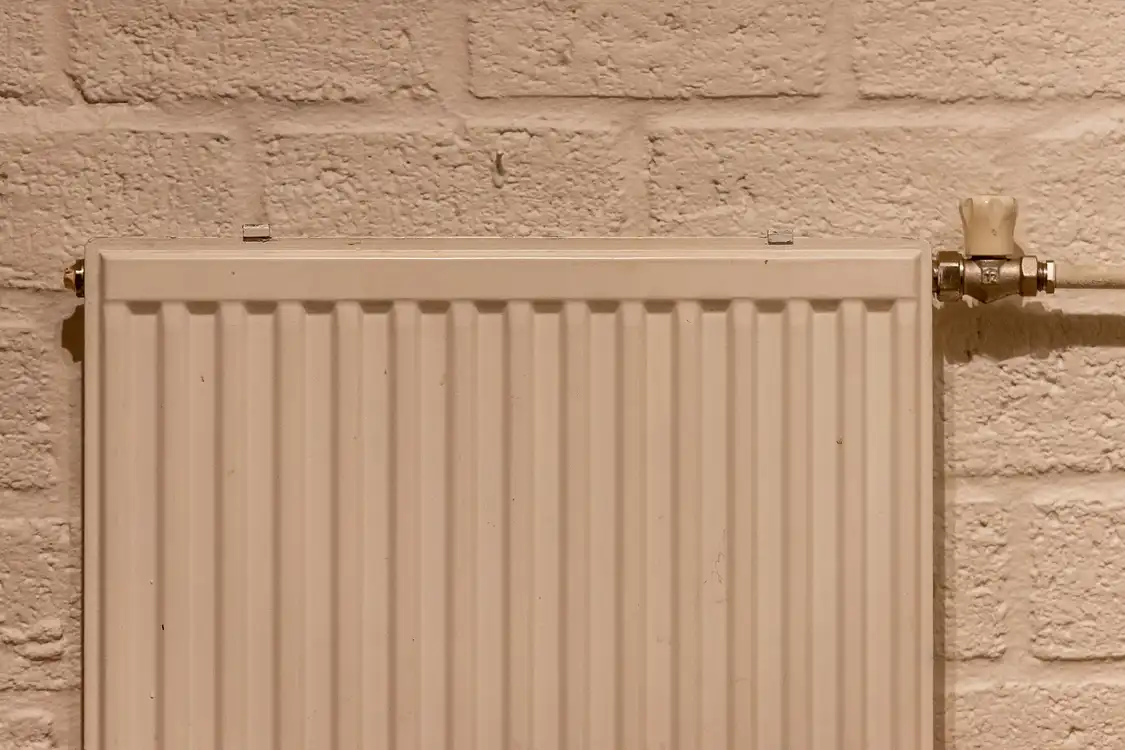
2. Find the bleed valve. It sits at the top corner of the radiator, on the side, and it looks like a round hole with a square shaft inside. The valve at the other end, near the bottom, is the inlet valve, not the bleed valve.
3. Put the bowl under the valve and hold the cloth under it. The bowl catches the water, and the cloth catches the drips and protects your hand.
4. Insert the radiator key and turn it anti-clockwise. Turn it slowly, only a quarter to a half turn. You will hear a hissing sound, which is the trapped air escaping. Do not unscrew the valve any further, and do not take the key out while the valve is open.
5. Wait for the hissing to stop. Keep the valve open until the hissing stops and water begins to trickle out in a steady stream. The moment you see water, the air is gone.
6. Close the valve. Turn the key clockwise until the valve is shut firmly. Do not over-tighten it, or you can damage the valve and cause a leak.
7. Wipe the valve and the radiator dry. Any water left on the metal can cause rust over time, so give it a quick wipe with the cloth.
8. Move to the next radiator. Start with the ground floor radiator furthest from the boiler, work back toward the boiler, then move upstairs and do the same, starting furthest from the boiler again. If you bleed the upstairs radiators first, trapped air can rise up and get stuck in the ones you just cleared.
9. Check the boiler pressure. Bleeding radiators lets air out, and it usually drops the pressure in the system. Read the section below before you turn the heating back on.
10. Turn the heating back on. Wait about 15 minutes, then feel the tops of the radiators. If the tops are the same temperature as the bottoms, it is sorted.
What if you do not have a radiator key?
Do not let a missing key stop you. Not all radiators need one. Modern radiators can often be bled with a flat-head screwdriver, because the bleed screw has a slot in it. Some radiators use an Allen key instead. Look at the bleed valve first: if it has a slot, use a screwdriver that fits it snugly; if it has a hexagonal hole, use an Allen key.
If the valve is square and you have no key, buy one before you start. A radiator key costs about a pound, and a screwdriver forced into a square valve will chew the metal and make the valve harder to open next time. Do not use pliers on the valve, for the same reason.
How do you top up the boiler pressure?
This is the step most guides rush past, and it is the step that causes the most confusion. Bleeding radiators removes air from the system, and the pressure drops. If the pressure drops too low, the boiler may not fire up at all, and you will think the bleeding made things worse. It did not. You just need to top the pressure back up.
Find the pressure gauge on the front of your boiler. It is a small round dial, often with a green zone marked on it. Read it with the heating off, then read it again with the heating on, because the pressure rises as the water heats up.
| Gauge reading | What it means | What to do |
|---|---|---|
| Below 1 bar | Too low, the boiler may not fire | Top it up with the filling loop |
| 1 to 1.5 bar, heating off | Correct | Nothing, turn the heating back on |
| About 2 bar, heating on | Correct | Nothing, this is normal when hot |
| Above 2.5 bar | Too high | Do not bleed more water out; call a heating engineer |
To top the pressure up, use the filling loop. It is usually a tap or a lever on the pipework under the boiler, and it connects the mains water supply to the heating system. Open it slowly and watch the gauge rise. Stop when the needle sits between 1 and 1.5 bar with the heating off, then close the loop properly. Your boiler manual shows exactly where the filling loop is on your model, so check it first if you are unsure. If you open the loop and the pressure does not rise, close it and call a heating engineer, because the loop itself may be faulty.
What if bleeding does not fix it?
Sometimes bleeding helps for a day and the radiator goes cold at the top again. Sometimes it does not help at all. That means the problem is not trapped air, and bleeding the radiator again will not fix it.
A radiator that is hot at the top and cold at the bottom has sludge in it. Sludge is the black, muddy sediment that builds up in heating systems over years, and it settles at the bottom of the radiator where the water moves slowest. Bleeding cannot remove it, because the air is not the problem. The fix is a powerflush, where a heating engineer flushes the whole system clean, or in bad cases the radiator has to come off the wall and be flushed outside. A magnetic filter fitted to the system will catch sludge before it settles again.
A radiator that is cold all over usually has a shut valve. Check the thermostatic valve at one end and the lockshield valve at the other, and make sure both are open. The thermostatic valve has numbers on it; turn it up to the highest setting and see if the radiator warms up. If the pin inside the thermostatic valve is stuck, which happens after a summer with the heating off, tap it gently or press it down with a small tool until it moves freely.
A radiator that gurgles again within days of bleeding may have air getting in somewhere else, often through a small leak in the system or a faulty automatic air vent. Check the pipework for damp patches and check the boiler pressure over a week. If the pressure keeps dropping, there is a leak somewhere, and you need a heating engineer to find it.
Cold radiators and damp walls often appear together in winter, because a cold room lets moisture settle on the walls. If the walls are damp as well as the radiators are cold, read our guide to damp in house before you blame the heating alone. Poor heating and cold walls also feed mould, so if black spots have appeared around the cold radiator, our guide to how to remove mould from walls shows how to clean them safely.
How often should you bleed your radiators?
Once a year is enough for most homes, and the best time is autumn, before the heating season starts properly. Bleed them when you first turn the heating on after the summer, and the system will run well all winter. After that, bleed a radiator only when it shows the signs: cold at the top, gurgling sounds, or cold patches.
Do not bleed your radiators every month out of habit. Each bleed drops the boiler pressure a little, and topping it up too often adds fresh water to the system, which brings in more air and more limescale. Bleed when the signs say so, and leave the system alone the rest of the time.
When should you call a Gas Safe engineer?
Bleeding a radiator is safe homeowner work, and you do not need a Gas Safe engineer for it. But there are jobs around the heating system that you must not do yourself. Anything that involves the gas supply, the boiler internals, or the flue needs a Gas Safe registered engineer by law.
Call a Gas Safe engineer if the boiler pressure keeps dropping after you top it up, if you can smell gas, if the boiler makes banging or kettling noises, if water is leaking from the boiler itself, or if bleeding and topping up do not fix a cold radiator. Also call one if the bleed valve is damaged, seized solid, or leaking after you close it, because forcing a damaged valve can flood the room.
If you rent your home, tell your landlord or letting agent about heating problems before you do anything beyond bleeding a radiator. The boiler and the heating system are the landlord’s responsibility, and they should arrange the engineer.
For more home guides, see our home-improvement section.
Frequently asked questions
Can you bleed a radiator with the heating on?
No. Turn the heating off and let the radiators cool for 20 to 30 minutes first. Bleeding with the heating on can spray hot water out of the valve and burn you, and the pump will keep pushing air around the system while you are trying to let it out.
How do I bleed a radiator without a key?
Look at the bleed valve first. Modern radiators can often be bled with a flat-head screwdriver, and some use an Allen key. If the valve is square and you have no key, buy a radiator key for about a pound rather than forcing a screwdriver into it, because that can damage the valve.
Why is my radiator still cold after bleeding?
If the top is now hot but the bottom is cold, the problem is sludge, not air, and the radiator needs flushing. If it is cold all over, check that both valves are open. If it gurgles again within days, air is getting in through a leak or a faulty vent, and a heating engineer should find it.
How often should I bleed my radiators?
Once a year, in autumn before the heating season starts, is enough for most homes. After that, bleed a radiator only when it shows the signs: cold at the top, gurgling sounds, or cold patches. Bleeding too often drops the pressure and adds fresh water to the system.
What should the boiler pressure be after bleeding?
Between 1 and 1.5 bar with the heating off, and about 2 bar with the heating on. If the gauge reads below 1 bar, top it up with the filling loop. If it reads above 2.5 bar, do not bleed more water out, and call a heating engineer.
Do I need a Gas Safe engineer to bleed a radiator?
No, bleeding a radiator is safe homeowner work. You need a Gas Safe registered engineer for anything involving the gas supply, the boiler internals, or the flue, and if the pressure keeps dropping, the boiler leaks, or bleeding does not fix a cold radiator.