Store sports equipment at home by giving every item a fixed place: hang bats, rackets and gloves on wall hooks, keep balls in a labelled basket, and keep kit bags on a shelf near the door. Clean and dry everything first, keep damp gear out of sealed boxes, and move off-season kit to a higher shelf or the loft.
Sports kit has a way of spreading. One cricket bat leans behind the door, a pair of boxing gloves sits on the stairs, a badminton racket ends up under the bed, and the kit bag nobody unpacked is still on the hallway floor a week after the game. It is not a lack of space that causes the mess. Most UK homes have enough room for a family’s sports gear. The problem is that the gear has no fixed home, so it lands wherever there is a free surface. This guide fixes that with a simple system: sort what you own, store each sport the way its kit needs, use the wall before you use the floor, and clean everything before it goes away. It is written for small UK homes, flats and houses with no garage, and it covers the sports this site writes about most: cricket, boxing, badminton, running and home gym kit.
Start by sorting what you actually own
Do not buy a single hook, basket or rack until you know what you are storing. Buying storage first is the mistake every top-ranking guide makes in reverse: they show you the products, then leave you to fit your gear around them. Start with the gear instead. Pull every piece of sports equipment out of its hiding place and put it on the floor where you can see it all at once. You will almost certainly find things you forgot you owned, and at least one thing that is broken, outgrown or never used.
Sort each item into one of four piles. Keep is gear that gets used and is in good condition. Repair is gear that works but needs a fix, a new grip, a restitched seam or a replacement lace. Clean is gear that is sound but dirty or damp and needs a wash or a wipe before it goes back. Let go is gear that is broken beyond repair, outgrown by a child who will never wear it again, or unused for a full year. Bag the let-go pile straight away and take it to a charity shop, a club kit swap or the recycling. Every item you remove is space you do not have to find.
Then sort the keep pile by sport, not by type. A cricket kit, a boxing kit and a badminton kit each need different storage, and a pile sorted by sport tells you how many kits you actually have. Give each kit a home of its own, so a whole kit can be picked up in one go, and label each home clearly, even if it is only a strip of masking tape with “cricket” written on it. A label turns a shelf into a system, because everyone in the house can see where things belong.
Storage by sport
Different sports damage their kit in different ways, so they need different storage. A cricket bat warps in damp. Boxing gloves go mouldy if they are sealed away sweaty. A badminton racket snaps its strings if something heavy sits on it. The table below gives the short version, and the sections after it explain each sport in full.
| Sport | Best way to store it | Keep it away from | Check before each use |
|---|---|---|---|
| Cricket | Bat upright in a corner or on a wall hook, pads and gloves in a kit bag on a shelf | Damp, radiators and direct sunlight, which warp the willow | Grip wear, loose binding, cracks in the blade |
| Boxing | Gloves open on a hook or shelf with air around them, hand wraps washed and rolled | Sealed bags and damp cupboards, which breed smell and mould | Split seams, flattened padding, smell that does not clear after airing |
| Badminton | Racket in its cover, upright in a slim compartment or hung by the handle | Heavy items on top, heat, and damp, which slacken strings | String tension, frame cracks, grip wear |
| Running | Shoes on a rack or tray by the door, laces loosened, kit washed and folded | Sealed plastic bags and radiators, which trap smell and dry out glue | Worn soles, collapsed heel cups, kit that still smells after washing |
| Home gym | Bands hung on hooks, balls in a basket, weights low on a sturdy shelf or the floor | Damp floors, which rust metal, and sunlight, which cracks rubber | Band nicks and tears, ball valves, rust on metal parts |
Cricket
A cricket bat is the one item in the house that genuinely needs care in storage. Willow is wood, and wood moves with damp and heat. Store the bat upright in a corner or on a wall hook, with the blade facing out so nothing leans on it. Never leave it in a damp shed or a garage that gets wet, and never lean it against a radiator. A bat left flat under a pile of other kit will warp, and a bat left in a hot car or a sunny window will dry out and crack. Pads, gloves and the rest of the kit can live in the kit bag on a shelf, but take the bat out of the bag at home, because a closed bag holds the damp from the last game. For more on looking after a bat, see our guide to how to grip a cricket bat and our cricket bat size guide, which also covers how to measure a bat for a growing child.
Boxing
Boxing gloves are the smelliest item in any sports cupboard, and the storage rule for them is simple: air, not a sealed bag. After training, open the gloves wide, pull the hand wraps out, and let both air dry before they go anywhere near a cupboard. Store the gloves on a hook or a shelf with air moving around them, never zipped inside a kit bag for days. Leather gloves need a dry, ventilated spot, and stuffing a ball or a rolled towel inside each glove helps it keep its shape. Hand wraps should be washed after every session, rolled up once dry, and kept in a small pouch or a mesh bag so they do not unravel through the drawer. If you train at home, our beginner boxing training routine at home explains how often each piece of kit gets used, which tells you what needs to live within easy reach and what can go on a higher shelf. Our guides to how to wrap hands for boxing and how to choose boxing glove size cover the kit itself.
Badminton
A badminton racket is light, thin and easy to break, so it needs protection from the one thing that ruins it: weight on top. Keep the racket in its cover and store it upright in a slim compartment, a tall narrow basket, or hung by the handle from a hook. Never slide it under a pile of clothes or lean a heavy box against it. Heat and damp both slacken strings, so keep it indoors, away from radiators and out of a cold damp shed. Shuttlecocks go in their tube, upright, with the lid on, so the feathers are not crushed. If you are choosing your first racket, our guide to how to choose badminton string tension explains the string and tension choices that decide how the racket plays.
Running and home gym kit
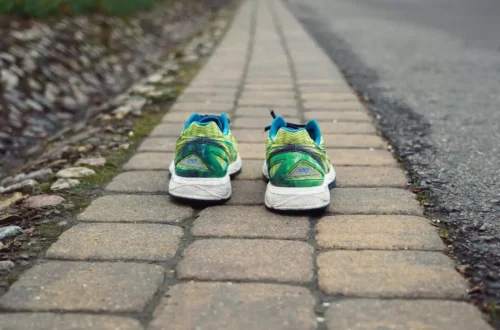
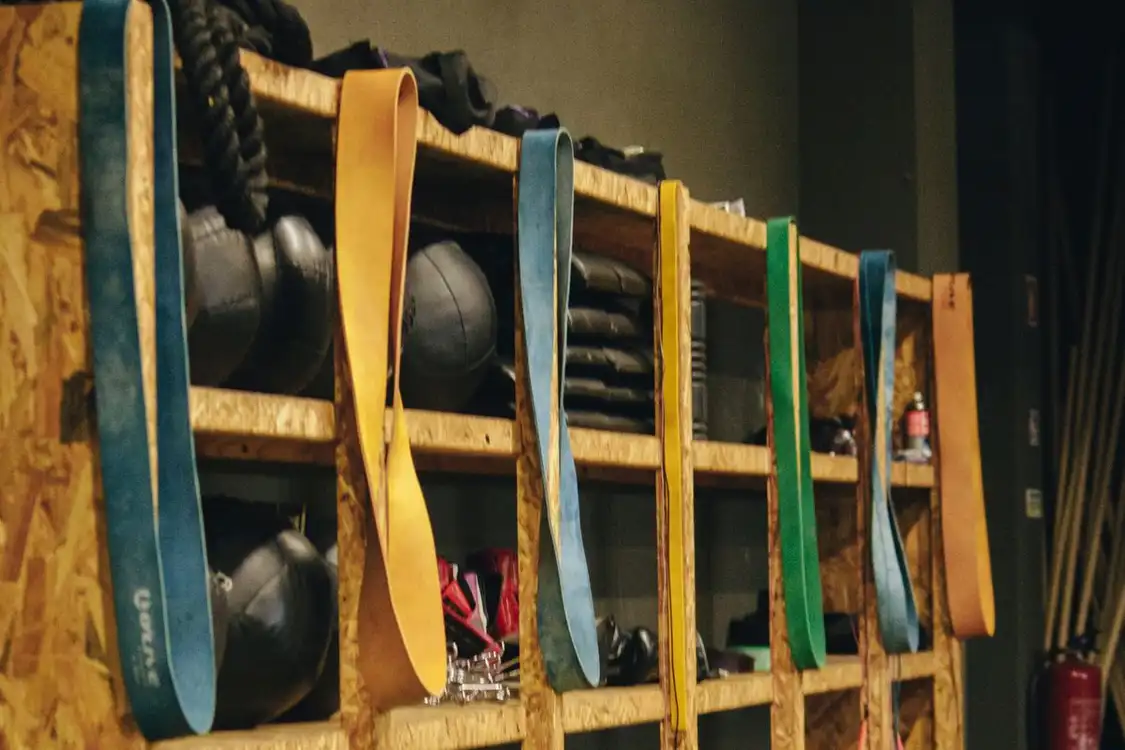
Running shoes belong on a rack or a tray by the door, with the laces loosened so the shoes hold their shape. Never store them in a sealed plastic bag, and never dry them on a radiator, which dries out the glue and warps the sole. Stuffing them with newspaper after a wet run pulls the moisture out faster. Gym kit that has been sweated in should be washed, not stored, and our guide to how to wash gym clothes without smell covers the wash routine that stops the smell coming back. Resistance bands hang best on hooks, because a band left folded in a drawer takes a permanent crease and a band left in sunlight cracks. Medicine balls and other balls go in a low basket or a ball rack, and weights go low, on a sturdy shelf or on the floor, never on a high shelf where a falling dumbbell can hurt someone or crack a tile.
Wall, cupboard or under the bed?
Most homes have three places for sports gear: the wall, a cupboard, or under the bed. Each one suits different kit, and the table below compares them honestly so you can match the gear to the spot instead of forcing everything into one cupboard.
| Spot | Best for | Strengths | Watch out |
|---|---|---|---|
| Wall hooks and pegboard | Bats, rackets, gloves, bands, skipping ropes, kit bags | Uses dead wall space, keeps gear visible and easy to grab, gear airs out | Needs solid fixings, heavy items must go on studs, not plasterboard alone |
| Cupboard or under-stairs | Kit bags, balls in bins, shoes on a tray, off-season kit | Hides the clutter, keeps gear out of the way, works in any home | Can get damp and airless, so never store wet gear here, and label every bin |
| Under the bed | Flat kit, yoga mats, folded kit bags, spare balls in shallow boxes | Free space in most bedrooms, good for flat or soft items | Hard to reach daily kit, dust gathers, and heavy items are awkward to pull out |
| Hallway shelf by the door | The kit in use this week, shoes, one kit bag per person | Grab and go, nothing gets forgotten on game day | Keep it to one bag each or the hallway becomes a second cupboard |
| Loft or top of a wardrobe | Off-season kit, spare gear, outgrown kit waiting for a younger sibling | Out of the way, frees the cupboard for the current season | Only for clean, dry gear in labelled boxes, never for anything needed weekly |
The wall is the best starting point in a small home, because wall space is usually wasted while floor space is not. A row of sturdy hooks on a hallway or spare-room wall holds a surprising amount: two bats, two rackets, a pair of gloves and a skipping rope take up less than a metre of wall. A pegboard gives you the same idea with more flexibility, because the hooks move as the gear changes. Put the fixings into a stud or use proper plasterboard fixings rated for the weight; a hook that pulls out of the wall takes the bat with it. Heavy items always go low, and light items go high, which is also the safety rule that keeps a falling weight from hurting anyone.
The under-stairs cupboard is the classic British sports store, and it works well for clean, dry gear only. It is often the dampest spot in the house, so wet kit left in there goes mouldy fast. Put a boot tray on the floor for muddy shoes, keep balls in labelled bins, and hang kit bags from hooks on the door. If the cupboard smells damp, air it out and keep leather and fabric kit out until it is dry.
Small-space ideas that work in UK homes
Not every home has a garage, and most of the big guides assume one. These ideas work in flats, terraces and small semis, where the hallway, the spare room and the cupboard under the stairs are all you have.
Use the back of a door. An over-door rack or a row of hooks on the inside of a cupboard door holds rackets, skipping ropes, swimming goggles and small kit without taking any floor space at all. It is the cheapest fix in this whole guide, and it works in a rented flat where you cannot drill into the walls.
Use shallow boxes under the bed. A shallow box on wheels slides under most beds and holds flat kit, folded kit bags and spare balls. Measure the gap first, because a box that is a centimetre too tall is useless, and keep it to gear that is not needed every day.
Use one basket per person. In a family, the kit that gets lost is usually the small stuff: one shin pad, one glove, one water bottle. Give each person a basket or a labelled crate, and make the rule that everything they own goes back in it after every game. It takes a week to become a habit, and it ends the morning search.
Use the hallway, but limit it. A shelf and a shoe tray by the front door is the best grab-and-go spot in the house, but only for the kit in use this week. One kit bag per person, no more. The moment a second bag appears, the hallway is a cupboard again.
Clean it before you store it
This is the step most guides rush past, and it is the one that decides whether your gear survives storage or rots in it. Sweat, mud and damp do not pause while kit sits in a cupboard. They keep working, and the damage shows up weeks later as smell, mould, rust or cracked rubber. Clean every item before it goes away, using the table below as a checklist.
| Item | Clean | Dry | Then store |
|---|---|---|---|
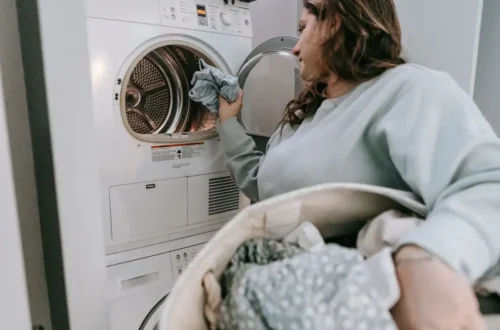
| Kit and clothing | Wash as normal, and air sweaty kit before it goes in the machine | Line dry or tumble dry on low, never put damp kit away | Folded on a shelf or in a labelled drawer |
| Boxing gloves | Wipe inside and out with a damp cloth, and wash hand wraps every session | Open wide in moving air until fully dry inside | On a hook or shelf with air around them, never sealed in a bag |
| Cricket bat and pads | Brush mud off pads, wipe the bat with a dry cloth | Air the pads fully, and keep the bat out of the kit bag | Bat upright on a hook, pads in the kit bag on a shelf |
| Rackets | Wipe the frame and grip with a dry cloth | Air dry, and keep out of damp sheds | In its cover, upright or hung by the handle |
| Balls | Wipe clean, and check the valve on inflatables | Air dry fully | In a basket or bin, partly deflate inflatables for long storage |
| Shoes and boots | Brush off mud, and remove the insoles to air them | Stuff with newspaper, and keep off radiators | On a rack or tray, laces loosened |
| Bands and ropes | Wipe with a damp cloth | Air dry out of sunlight | Hung on hooks, never folded tight in a drawer |
Two rules cover nearly everything in that table. First, nothing damp goes into a sealed box or a closed bag: damp plus dark plus no air is how mould grows. Second, keep stored gear off a bare floor. A concrete garage floor or a damp cupboard floor passes moisture straight into fabric, leather and cardboard boxes, so use a shelf, a pallet or a raised tray.
Protective gear deserves a special note. If a helmet, a pad or a guard is cracked, split or missing a part, do not put it back in the ready pile. Follow the maker’s inspection and replacement instructions, and get a helmet professionally checked if you have any concern about it. A damaged helmet stored as if it were fine is worse than no helmet at all, because it gives false confidence on the day it is needed.
Rotate gear with the seasons
Most families use different gear in summer and winter, and the storage system should move with that. Cricket and tennis live on the easy shelf from spring to autumn, and football, rugby and badminton take over in the colder months. Twice a year, in spring and in autumn, do a ten-minute swap. Clean the gear that is going away, check it for damage, label its box, and move it to the higher shelf, the top of the wardrobe or the loft. Then bring the next season’s kit down to the easy shelf by the door.
The same swap is the right time to check sizes. Children outgrow kit fast, and a box of outgrown boots and pads is dead weight in the cupboard. Pass it to a younger sibling, a club kit swap or a charity shop, and free the space for the size that fits now. Winter clothes follow the same rule, and our guide to how to store winter clothes covers the same clean, dry and label routine for the wardrobe.
Mistakes that ruin sports equipment
Most ruined kit is not worn out. It is stored wrong. These are the mistakes that do the most damage, and all of them are easy to avoid.
Storing kit wet is the biggest one. A sweaty glove zipped in a bag, a muddy kit left in the boot of the car, a damp towel folded into a drawer: all of them go mouldy, and mould is hard to remove from leather and padding once it has set in. Always air gear out first, even if it is only for an hour on a drying rack.
Piling heavy things on light things is the second. A box of books on a badminton racket, a dumbbell on a cricket bat, a stack of shoes on a helmet: the light item always loses. Store light, fragile kit where nothing can fall on it, and store heavy kit low.
Leaving kit in the car is the third. A car in summer is an oven and in winter a fridge, and both extremes damage rubber, glue and leather. Balls left in a hot car lose pressure or split, and gloves left in a cold damp car go stiff and smelly. Bring the kit indoors after every game.
Forgetting the small pieces is the fourth. Laces, valves, pump needles, shuttlecock tubes, grip tape and spare insoles are the bits that go missing, and a kit without its small pieces is a kit you cannot use. Keep a small labelled pouch or a jam jar on the same shelf as the kit, and put every small piece back in it the moment it comes off.
Buying storage before sorting is the fifth. A wall of shiny racks means nothing if half the gear on it is broken or outgrown. Sort first, throw out what is dead, and then buy only the hooks and bins the remaining gear actually needs.
Frequently asked questions
Where is the best place to store sports equipment at home?
On the wall and in a cupboard near the door, not on the floor. Hang bats, rackets and gloves on hooks, keep balls in a labelled basket, and keep one kit bag per person on a shelf by the exit. In a home with no garage, the under-stairs cupboard and a hallway shelf do the same job as a garage rack.
How do I store sports equipment in a small flat?
Use the wall and the back of doors first, because they take no floor space. A row of hooks holds bats and rackets, an over-door rack holds small kit, and a shallow box under the bed holds flat gear. Keep only the kit in use this week by the door, and move off-season gear to the top of a wardrobe.
Should I store boxing gloves in a bag?
No, not for more than the trip home. Gloves need air, so open them wide, let them dry fully, and store them on a hook or a shelf with air moving around them. A sealed bag traps sweat and damp, which causes smell and mould. Wash the hand wraps after every session and store them rolled in a small pouch.
How do I stop my sports kit smelling in storage?
Clean and dry everything before it goes away, and never store anything damp. Wash kit and hand wraps, wipe gloves and shoes, and air it all until it is fully dry. Store leather and fabric kit in a ventilated spot, not a sealed box, and keep stored gear off a bare floor where damp can reach it.
Can I store sports equipment in the garage or shed?
Yes, if the space is dry. A dry garage or shed suits bats, balls and hard kit, but a damp one ruins leather, fabric and wooden items. Keep gear off the floor on shelves or hooks, use labelled bins with lids, and bring gloves, rackets and fabric kit indoors if the shed gets damp in winter.
How should I store sports equipment for the off-season?
Clean it, dry it fully, check it for damage, and label the box before it goes away. Partly deflate balls and other inflatables, keep leather gear in a ventilated spot, and store the box on a higher shelf, the top of a wardrobe or the loft. Bring it down a week before the season starts so you can check it still fits and still works.
For more sports guides, see our sports section.