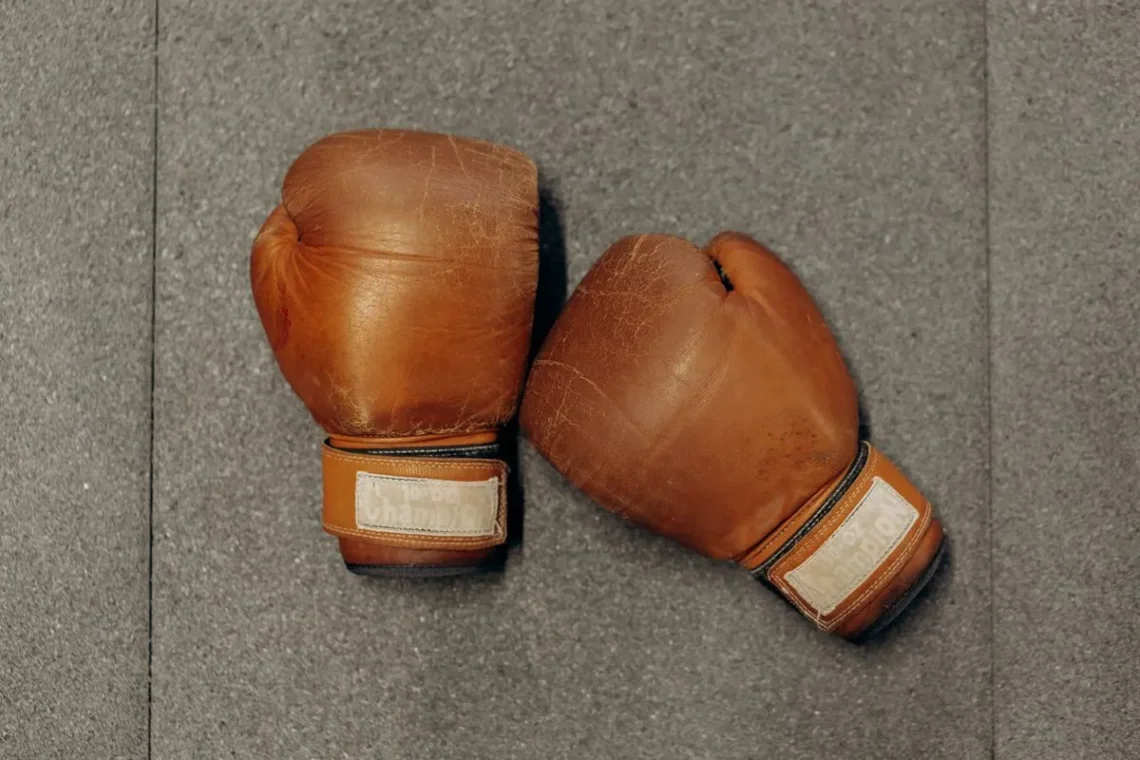
Clean boxing gloves by wiping the inside and outside with a clean towel after every session, then spraying the inside lightly with a half-and-half white vinegar and water mix and letting them air dry fully with the straps open. Never put gloves in a washing machine or tumble dryer, and wash hand wraps after every session.
Every boxer knows the smell. You open your kit bag after a hard session and the gloves hit you before you even see them. It is not just unpleasant. A warm, damp glove is a perfect home for the bacteria that cause the smell, and if the inside never dries out properly, the padding can start to break down and the leather can crack. The good news is that cleaning boxing gloves is simple and cheap. It takes about five minutes after each session, plus a deeper clean once a week if you train regularly. This guide covers the quick routine that stops the smell starting, the deep clean that fixes gloves that already stink, how to treat leather and synthetic gloves differently, and the mistakes that ruin gloves for good. It is written for UK boxers training at home or at a club, with products you can buy in any UK supermarket or sports shop.
Why boxing gloves smell
Gloves smell because sweat, heat and no air are all trapped in the same place. Your hands sweat inside the gloves, and the sweat soaks into the lining and the foam padding underneath it. The bacteria that live on your skin feed on that sweat, and as they grow they make the compounds that smell bad. A closed kit bag makes it worse, because there is no airflow inside it, so the gloves stay warm and damp for hours after training. That is why the first rule of glove care is not about cleaning products at all. It is about getting the gloves out of the bag and into moving air as soon as you get home.
Leather gloves and synthetic gloves smell for the same reason, but they need slightly different care, which the material table below covers. The smell itself is a warning sign, not just a nuisance. If gloves smell strongly even after airing, the inside is still damp, and damp padding is where mould starts. Clean them before the smell sets in, not after, and the gloves will last far longer.
The after-every-session routine
This five-minute routine is the whole secret. Do it after every single session, and you will rarely need a deep clean at all. Skip it, and no amount of baking soda later will fully fix gloves that have been sealed in a bag damp for days.
First, take the gloves out of your kit bag as soon as you get home. Do not leave them in the bag overnight, even if you are tired. Open the straps wide so air can get into the glove. Second, wipe the inside of each glove with a clean, dry towel. Wrap the towel around your hand, push it inside the glove and move it around to soak up as much sweat as you can. Do the same for the outside to remove sweat and dust from the surface. Third, spray the inside lightly with your vinegar mix: half white vinegar and half water in a spray bottle, a few spritzes per glove, not a soaking. White vinegar is sold in every UK supermarket for under a pound, and the smell fades as the glove dries. Fourth, stand the gloves upright somewhere with moving air, with the cuffs open, and leave them there until they are fully dry inside. A drying rack near a window, a shelf by an open door, or a spot in front of a fan all work. Fifth, wash your hand wraps. Wraps soak up most of the sweat before it reaches the glove, so washing them after every session is the cheapest way to keep the gloves fresh. Hang them to dry, unrolled, so they dry right through.
If you train twice a day, you need a longer drying window, so give the gloves at least 8 to 12 hours before the next session, and consider a second pair to rotate if you can afford it. A fan blowing into the gloves speeds drying up a lot, and it costs nothing to run for an hour.
How to deep clean boxing gloves
When gloves already smell, or once a week if you train three or more times a week, give them a proper deep clean. You need a bowl of warm water, a mild detergent such as baby shampoo or washing-up liquid, white vinegar, two clean cloths or a sponge, and baking soda. Work on the outside first, then the inside, and let the gloves dry fully before you use them again.
Start with the outside. Mix a few drops of mild detergent into a bowl of warm water, and add a splash of white vinegar if you like. Dip a cloth or sponge in, wring it out well so it is damp, not dripping, and wipe down the whole outside of each glove: the front, the back, the sides and the cuff. Pay attention to the seams and the thumb area, where sweat and dirt collect. Then rinse the cloth, dampen it with clean water only, and wipe the gloves again to remove any soapy residue. Soap left on leather dries it out, and soap left on synthetic gloves leaves a sticky film, so this rinse wipe matters.
Then do the inside. Wipe the lining with a cloth dampened in the same soapy water, working your hand inside the glove to reach the finger area. Do not pour water into the glove, and do not soak it. A damp cloth is enough, because the lining is thin and the padding underneath must stay dry. After wiping, spray the inside with the half-and-half vinegar mix, or with a sports-gear disinfectant spray if you prefer a shop-bought option. Antibacterial sprays made for gym gear are sold in UK sports shops and pharmacies, and they are made to kill surface bacteria without damaging synthetic materials. Open the straps wide and leave the gloves to air dry completely.
If the smell is still there after the gloves are dry, use baking soda. Sprinkle a generous scoop of dry baking soda inside each glove, leave it overnight, then shake the gloves out hard over a bin in the morning. A vacuum hose with a narrow nozzle clears the last of the powder. Baking soda pulls moisture out of the foam and neutralises the acidic compounds behind the smell, and it costs pennies. Repeat the baking soda step for two or three nights in a row for gloves that have been neglected for months.
For leather gloves, finish with conditioner. Once the gloves are clean and fully dry, rub a small amount of leather conditioner into the outside with a lint-free cloth, using small circular motions, then wipe off any extra with a clean towel. Leather is skin, and it dries out just like yours does. Conditioning keeps it soft and stops it cracking. Use a conditioner made for leather goods, not a household cleaner, and test it on a small hidden patch first.
Which cleaning method works best
There is no single best method. Each one does a different job, and the right choice depends on whether you are doing a daily wipe or rescuing gloves that already stink. The table below compares the methods the top guides recommend, with the warnings each one carries.
| Method | What it does | Best for | Watch out |
|---|---|---|---|
| Vinegar spray (half white vinegar, half water) | Cuts bacteria and odour on the surface | After every session, inside and outside | Not a full disinfectant, so do not rely on it alone for a deep clean |
| Baking soda overnight | Absorbs moisture and neutralises smell | Gloves that already smell, once a week | Shake it all out before training, or the powder will cake inside |
| Sports-gear disinfectant spray | Kills surface bacteria quickly | After every session, especially shared or club gloves | Check it suits your glove material, and never spray a soaking amount inside |
| Mild soapy wipe | Removes dirt, sweat and grime from the surface | Weekly deep clean, outside and lining | Wring the cloth out well, and wipe again with clean water to remove soap |
| Cedar inserts (glove dogs) | Absorb moisture and keep gloves fresh between sessions | Drying and storage, especially in a damp house | They help with smell but they do not clean a dirty glove |
| Essential oil mist | Leaves a clean scent behind | A light freshen-up after cleaning | Tea tree oil can irritate skin, so leave it out if your skin is sensitive |
The cheapest combination that works is the vinegar spray after every session plus baking soda once a week. The disinfectant spray is worth it if you share gloves, train at a club where gloves are passed around, or have had a skin infection before. Cedar inserts are a drying aid, not a cleaner, so use them after cleaning, not instead of it.
Cleaning by glove material
Leather and synthetic gloves look similar, but they fail in different ways. Leather dries out and cracks. Synthetic gloves, usually vinyl or polyurethane, peel and split at the seams when they are soaked or heated. Clean each one the way its material needs.
| Material | Clean with | Condition | Dry | Never |
|---|---|---|---|---|
| Leather | Damp cloth with mild soap, then a vinegar spray | Yes, leather conditioner after cleaning, once a month | Air dry away from radiators and direct sun | Soak it, machine wash it, or use bleach, ammonia or harsh sprays |
| Synthetic (vinyl or polyurethane) | Damp cloth with mild soap, then a disinfectant spray | No, conditioner is for leather only | Air dry away from radiators and direct sun | Soak it, machine wash it, tumble dry it, or use solvents |
| Both types | Baking soda overnight for smell | Not needed for the lining | Straps open, in moving air, until fully dry inside | Leave damp in a sealed kit bag |
If you are not sure what your gloves are made of, check the label inside the cuff. Most budget gloves sold in the UK are synthetic, and most gloves over about 60 pounds are leather, but the label is the only sure way to tell. When in doubt, treat them as leather: gentler cleaning, no soaking, and a conditioner will not hurt a synthetic glove, but solvents and bleach will ruin either type.
How to dry boxing gloves properly
Drying is half the job, and it is the half most guides rush past. A glove that is cleaned but left damp will smell again within a day, because the bacteria never left. Air drying is the safest method for every type of glove, and the rules are simple.
Open the straps as wide as they go and stand the gloves upright, cuff up, so air can flow into them. Put them in a ventilated spot, not in a closed cupboard or a zipped bag. A fan blowing into the gloves speeds the drying a lot, and a boot dryer on its cool setting does the same job. Stuffing the gloves helps too: a rolled-up towel, a ball, or a pair of cedar glove dogs inside each glove holds it open and pulls moisture out of the lining. Never dry gloves on a radiator, with a hairdryer on hot, or in direct sunlight. Heat cracks leather, melts foam and warps synthetic shells, and sunlight fades and dries out leather just as fast. Never leave gloves in a damp shed or garage to dry, because the damp in the air works against you.
How long drying takes depends on how wet the gloves are and how much air they get. In a ventilated room with a fan, most gloves dry overnight. Without moving air, allow a full day, and check the inside with your hand before you use them again. If the lining still feels cool and damp, give it more time. Training in gloves that are still damp inside is what starts the smell cycle all over again.
What never to do to boxing gloves
Some cleaning ideas sound sensible and ruin gloves fast. Never put boxing gloves in a washing machine. The agitation and the water saturation destroy the padding, warp the shape and weaken the stitching, and the gloves will never feel the same again. Never put them in a tumble dryer. The heat melts foam, cracks leather and warps synthetic shells. Never soak gloves in a bucket or a sink. Water gets into the foam padding and is almost impossible to dry out fully, so it rots and grows mould from the inside. Never use bleach, ammonia, peroxide or harsh chemical cleaners on gloves. They break down the materials, strip the natural oils from leather, and can irritate your skin the next time you train. Never use a fabric freshener spray such as Febreze as a cleaner. It only masks the smell and does nothing about the bacteria causing it. And never leave gloves sealed in a kit bag for days. A zipped bag with no airflow is the best place in the house for bacteria to grow.
Do not forget your hand wraps
Hand wraps do more for glove hygiene than any spray, because they soak up most of the sweat before it reaches the glove. That only works if the wraps themselves are clean. Wash your wraps after every 2 to 3 sessions at the latest, and after every session if you train hard or sweat heavily. Machine wash them in a mesh laundry bag on a cool wash, or hand wash them in warm water with a little detergent, then hang them to dry, unrolled, so they dry right through. Never put damp wraps back in the glove or the kit bag, because they carry the same bacteria straight back in. If your wraps smell even after washing, soak them for half an hour in warm water with a splash of white vinegar before washing them as normal. For the wrapping itself, see our guide to how to wrap hands for boxing, and for choosing the right size of glove to go over the wraps, see our guide to how to choose boxing glove size.
How often to clean your gloves
How often you clean depends on how often you train. The table below is a simple schedule. The after-session wipe is not optional at any level, because it is the step that stops the smell starting in the first place.
| How often you train | After every session | Weekly | Monthly |
|---|---|---|---|
| Once a week | Wipe inside and out, vinegar spray, air dry, wash wraps | Deep clean the outside and lining | Baking soda overnight, leather conditioner if leather |
| 2 to 3 times a week | Wipe inside and out, vinegar spray, air dry, wash wraps | Deep clean, baking soda overnight | Check seams and padding, leather conditioner if leather |
| 4 or more times a week | Wipe inside and out, disinfectant spray, air dry with a fan, wash wraps | Deep clean twice, baking soda overnight | Check seams and padding, leather conditioner if leather, consider a second pair to rotate |
| Shared or club gloves | Wipe and disinfect inside and out, air dry fully | Deep clean, baking soda overnight | Check for wear and replace if the padding has flattened |
If you train at home, our beginner boxing training routine at home sets out a four-week plan, which also tells you how often each piece of kit gets used. And if your gym kit smells too, our guide to how to wash gym clothes without smell covers the wash routine that stops the smell coming back. For storing gloves between sessions, see our guide to how to store sports equipment at home.
When to replace your gloves
Cleaning keeps gloves going, but it cannot fix gloves that are worn out. Replace your gloves if the padding has flattened and no longer protects your knuckles, if a seam has split open, if the leather has cracked through, or if the smell stays after a deep clean and two or three nights of baking soda. A glove with flattened padding is not just uncomfortable, it leaves your hands unprotected, and that is when injuries happen. Most regular trainers get a year or two out of a pair with good care, and heavy daily use shortens that. When you do replace them, keep the old pair for bag work only if the padding is still sound, and recycle the rest rather than leaving it in the cupboard.
Frequently asked questions
Can you put boxing gloves in the washing machine?
No, never put boxing gloves in a washing machine. The agitation and water saturation destroy the foam padding, warp the shape and weaken the stitching. The padding soaks up water that is almost impossible to dry out fully, so it can rot and grow mould from the inside. Clean gloves by hand with a damp cloth and a vinegar or disinfectant spray instead.
How do you get the smell out of boxing gloves?
Wipe the inside with a dry towel after every session, spray lightly with a half-and-half white vinegar and water mix, and let the gloves air dry fully with the straps open. For gloves that already smell, sprinkle baking soda inside each glove, leave it overnight, and shake it out in the morning. Repeat for two or three nights for a stubborn smell.
How often should you clean boxing gloves?
Wipe and spray them after every session, deep clean them once a week if you train two or more times a week, and use baking soda overnight once a month or whenever the smell returns. Wash your hand wraps after every 2 to 3 sessions, and after every session if you train hard.
Can you use disinfectant spray on boxing gloves?
Yes, a sports-gear disinfectant spray is one of the quickest ways to clean gloves, and it suits both leather and synthetic gloves. Spray the inside and outside lightly, open the straps wide, and let the gloves air dry fully. Avoid harsh household cleaners such as bleach, ammonia and peroxide, which damage glove materials and can irritate your skin.
How do you dry boxing gloves fast?
Open the straps wide, stand the gloves upright with the cuffs up, and put a fan blowing into them in a ventilated room. Stuffing each glove with a rolled towel or a cedar insert holds it open and pulls moisture out. Most gloves dry overnight this way. Never use a radiator, a hairdryer on hot, or a tumble dryer, because heat cracks leather and melts foam.
Should you clean leather boxing gloves differently?
Yes, leather gloves need a gentler clean and a conditioner afterwards. Wipe them with a damp cloth and mild soap, never soak them, and rub in a small amount of leather conditioner once a month to keep the leather soft and stop it cracking. Synthetic gloves need no conditioner, but the same no-soaking and no-heat rules apply to both types.
For more sports guides, see our sports section.